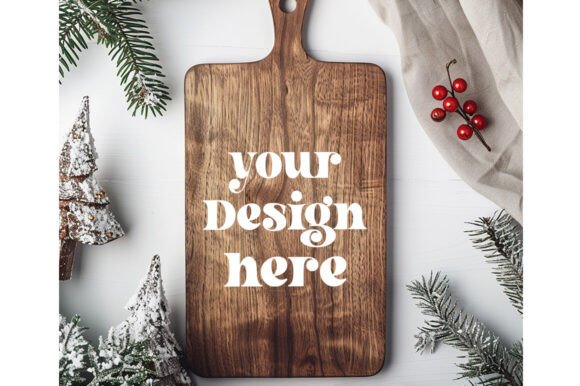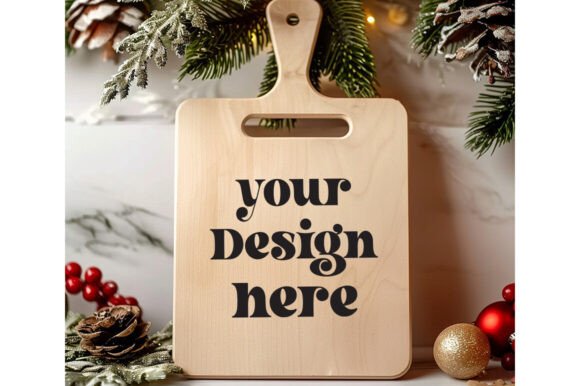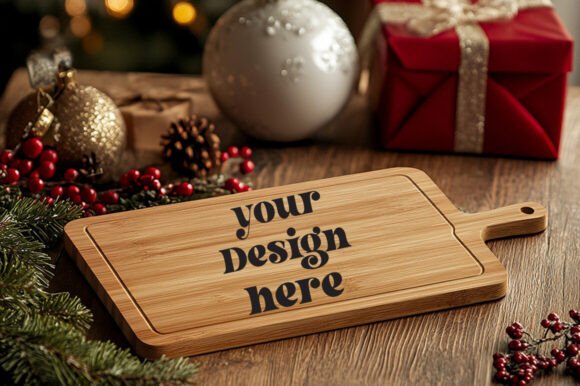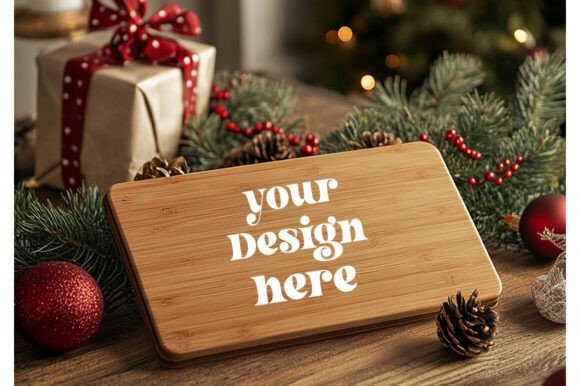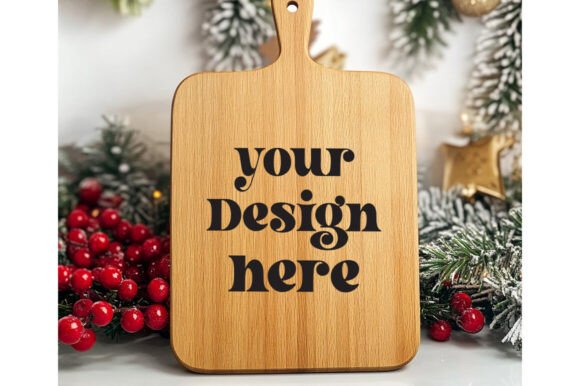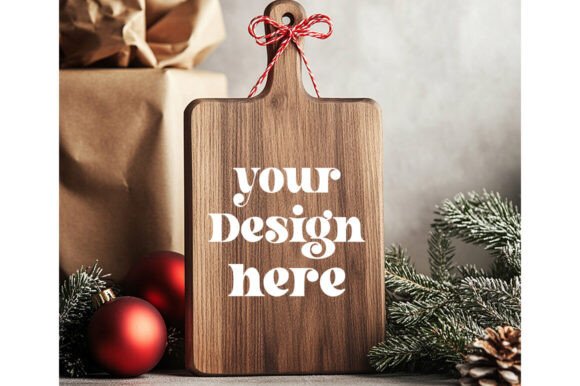
Christmas Cutting Board Mockup 19: Graphics for Product Mockups
As a brand designer who has spent the last decade helping local artisans and small business owners translate their vision into tangible assets, I approach every new graphic design asset with a critical eye. It is not enough for a file to look pretty on a screen; it must hold up under the scrutiny of print production, shelf placement, and digital marketing. Recently, I evaluated Christmas Cutting Board Mockup 19 for a potential holiday campaign for a local artisanal food brand, and the results offered significant insights into how specific Product Mockups can elevate small business branding.
My first impression of this asset was its ability to ground a design in warmth and tradition. In the world of local business marketing, especially during the festive season, authenticity is currency. This mockup does not scream "digital template"; instead, it suggests a narrative of home cooking, heritage, and care. The mood it creates is undeniably rustic yet refined, making it an ideal fit for brands that position themselves as handmade, organic, or boutique. For a handmade business selling specialty jams, charcuterie kits, or artisanal cheeses, this visual context immediately establishes a premium feel without needing excessive explanation.
Elevating Brand Identity Through Contextual Presentation
The true power of Christmas Cutting Board Mockup 19 lies in its versatility within a comprehensive brand identity system. While many designers might view such an asset solely as a way to display a final product, I see it as a foundational element for broader marketing visuals. Imagine a scenario where a local bakery is launching a limited-edition holiday cookie set. Using this mockup allows the designer to showcase the product label in situ, giving the client a realistic preview of how their logo design will interact with wood textures and seasonal lighting.
Beyond simple product display, this asset supports a wide array of promotional needs. It serves as an excellent background for social media graphics, allowing a social media manager to create cohesive posts that highlight seasonal offers. It can be adapted for website banners, providing a hero image that instantly communicates the holiday spirit. Furthermore, for packaging design, it helps visualize how hang tags, thank-you cards, and stickers will look when placed alongside the primary product. This holistic approach ensures that the visual hierarchy remains consistent across all touchpoints, from the physical package to the Instagram feed.
Strategic Applications for Local Entrepreneurs
For creative entrepreneurs and packaging designers, the utility of this mockup extends into several key areas of business presentation:
- Product Labels: Visualizing how typography and illustrations wrap around or sit upon a textured surface.
- Packaging Accents: Testing the visibility of foil stamps or embossed details against the wood grain.
- Hero Graphics: Creating standout images for email newsletters and landing pages.
- Seasonal Campaigns: Developing a unified look for holiday-specific promotions.
- Social Media Content: Generating high-engagement posts that showcase products in a lifestyle setting.
By integrating Christmas Cutting Board Mockup 19 into these workflows, businesses can achieve a stronger first impression. Customers are more likely to trust a brand that presents its products professionally. When a potential buyer sees a high-quality product mockup that looks like a photograph taken in a real kitchen, it bridges the gap between digital browsing and physical ownership. This leads to better shelf appeal, even in an online store, and fosters a deeper emotional connection with the audience.
Navigating Design Constraints and Best Practices
However, professional branding requires discernment. While this asset is powerful, it is not a universal solution for every commercial design project. There are specific contexts where Christmas Cutting Board Mockup 19 should be used with caution. For instance, formal corporate branding or luxury minimalist brands that rely on stark white space and sans-serif typography might find the rustic wood texture too distracting. The organic nature of the board can compete with important text if the layout is too crowded.
Additionally, designers must be mindful of legibility. If a product label contains dense legal information or ingredient lists, placing it directly over the complex grain of the cutting board in a mockup presentation could reduce readability. It is crucial to ensure that there is sufficient contrast between the label design and the background. For very small labels, the details of the wood texture might overwhelm the graphic elements, so testing at scale is essential.
Practical Notes for the Professional Designer
Before committing to this asset for a client project, I recommend a rigorous testing phase. Here are my practical notes for ensuring the highest quality output:
- Test on Real Packaging: Always overlay your design on the actual dimensions of the client's packaging to ensure proportion accuracy.
- Check Black and White Usage: Verify how the design translates if the client needs monochromatic assets for specific print runs.
- Preview on Small Labels: Ensure that intricate details in your illustration or SVG design do not get lost when scaled down.
- Color Harmony: Test your brand colors against the warm tones of the wood to avoid clashing hues.
- Competitor Analysis: Compare your mockup presentation with competitor packaging to ensure you stand out on the shelf.
- Print Quality: If using the rendered images for print collateral, confirm the resolution meets professional standards (usually 300 DPI).
- Font Pairing: Experiment with serif, script, and handwritten fonts to see which complements the rustic aesthetic best.
- Licensing Verification: Always confirm the commercial license terms before using the asset for client work or physical product sales.
It is worth noting that while the original description suggests this mockup can easily be used to show illustrations, T-shirt designs, SVG cut files, watercolors, and drawings to clients or display items in a shop, the application for food and home goods branding is particularly potent. The low-resolution previews often found in marketplaces should never be used for final deliverables; always secure the high-resolution files to maintain professional branding standards.
In conclusion, Christmas Cutting Board Mockup 19 is a valuable tool in the arsenal of a modern brand designer. When used strategically, it transforms abstract design assets into compelling visual stories. Whether for a Canva template aimed at DIY sellers or a custom editorial design for a high-end catalog, this mockup provides the necessary context to make products feel real, desirable, and ready for the holidays. By understanding its strengths and limitations, local business owners and designers can leverage this resource to build trust, enhance recognition, and drive sales in a competitive marketplace.